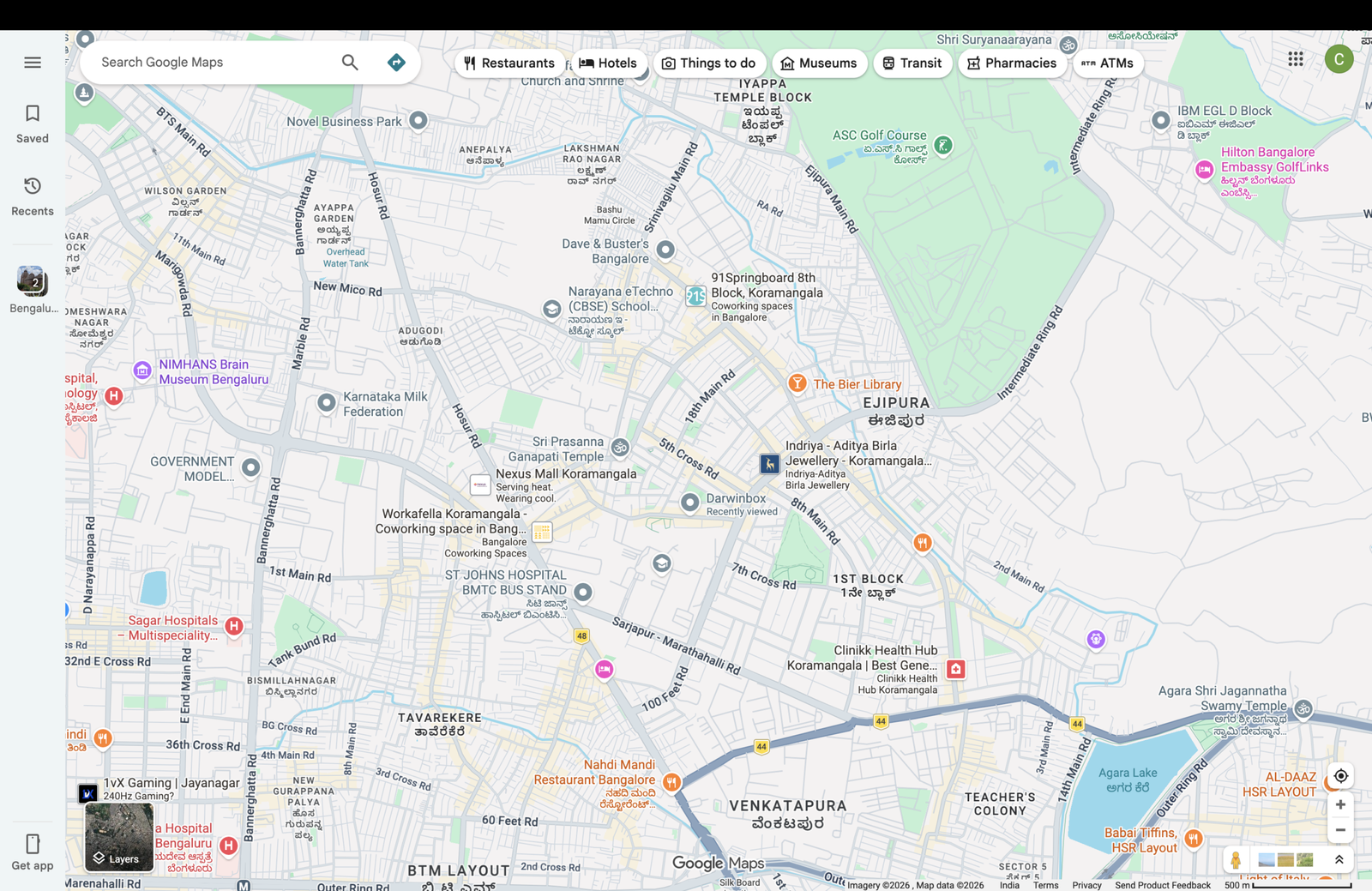
Executive Summary
Google Maps has evolved from a C++ desktop program into a global geospatial infrastructure used by over one billion people monthly and integrated into more than one million websites via its API. The platform currently centers on three pillars: Maps, Routes, and Places, recently augmented by advanced AI-powered products and environmental data insights.
Key takeaways for stakeholders include:
- AI Integration: The platform is transitioning toward generative AI, offering tools like “Grounding with Google Maps” to improve LLM accuracy and AI agents for rapid prototyping and route optimization.
- Operational Security: For developers, securing API keys and setting strict budget quotas is critical to preventing unauthorized usage and financial surprises.
- Data Sophistication: Moving beyond 2D maps, Google now provides Photorealistic 3D Tiles, “Immersive View” for routes, and specialized environmental layers (Air Quality, Pollen, Solar).
- Global Sensitivities: Implementation is complicated by regional laws (e.g., China’s GCJ-02 coordinate system) and significant geopolitical controversies regarding territory labeling and privacy.
- Safety and Accuracy: Recent incidents of misdirection—some resulting in fatalities—highlight the ongoing tension between algorithmic routing and real-world environmental conditions.
——————————————————————————–
Technical History and Evolution
Google Maps originated as a C++ program at Australia-based Where 2 Technologies, founded in 2003. After being acquired by Google in 2004, it was converted into a web application.
Major Acquisitions and Milestones
- 2004: Acquisition of Keyhole (geospatial visualization, later Google Earth) and ZipDash (real-time traffic analysis).
- 2005: Official launch of Google Maps (February 8).
- 2007: Launch of Street View and traffic overlays via crowdsourced mobile data.
- 2013: Recognized as the world’s most popular smartphone app (54% global usage).
- 2018: Major API overhaul consolidating 18 endpoints into three services (Maps, Routes, Places) and introducing a pay-as-you-go billing model.
- 2020: 15th-anniversary redesign and introduction of COVID-19 data layers (later discontinued in 2022).
——————————————————————————–
Google Maps Platform: Core Products and AI Tools
The platform is divided into functional categories designed for enterprise and developer integration.
1. Geospatial AI Solutions
Google has introduced low-code and AI-integrated tools to streamline development:
- Google Maps AI Kit: A widget for rendering interactive maps in AI chats.
- Grounding with Google Maps: Enhances LLM responses using fresh data from over 250 million global places.
- AI Agents: Specialized agents for app prototyping (Builder agent), customized styling (Maps Styling agent), and fleet management (Route Optimization agent).
2. Primary API Categories
| Category | Key Capabilities |
| Maps | 3D Photorealistic Tiles, Aerial View (cinematic video), Dynamic Street View, and Elevation data. |
| Routes | Directions with real-time traffic, Route Optimization for multi-stop fleets, and Navigation SDKs. |
| Places | Autocomplete, Address Validation, Geocoding, and “Nearby Search” with rich place details. |
| Environment | Real-time data for Air Quality, Pollen levels, and Solar array design tools. |
——————————————————————————–
Developer Best Practices
To ensure project stability and cost-effectiveness, Google recommends 15 core best practices for Platform users:
- Secure API Keys: Apply restrictions (IP, HTTP, or App-based) to every key immediately upon generation.
- Budget Management: Set budget alerts to trigger notifications and quotas to hard-limit requests per day/second to avoid over-billing.
- Utilize Documentation: Reference the FAQ and in-depth guides for every API and SDK.
- Community Support: Engage with the developer community on StackOverflow for debugging and maintenance.
- Expert Support: Use the Google Cloud Console for Severity 1 issues (1-hour response time on weekdays).
- Issue Tracking: Monitor the public Issue Tracker for known bugs and feature requests.
- Team Redundancy: Add multiple owners to projects and use Google Cloud Platform organizations to prevent loss of access during staff turnover.
- Stay Updated: Subscribe to email notification groups for API changes and service disruptions.
- Public Programs: Nonprofits, news media, and crisis response organizations should apply for platform credits.
- Open Source Libraries: Utilize utility libraries for marker clustering, heatmaps, and platform-specific (Android/iOS) features.
- Continuous Optimization: Regularly check the optimization guide to improve performance and reduce costs.
——————————————————————————–
Functionality and Advanced Visualization
Immersive and 3D View
Google uses Neural Radiance Fields (NeRF) and predictive modeling to create “Immersive View,” which synthesizes billions of Street View and aerial images into a 3D model. This includes historical weather and traffic data to forecast conditions up to a month in advance.
Current Immersive View Locations (Representative Sample): | Region | Featured Cities | | :— | :— | | North America | New York City, Los Angeles, San Francisco, Vancouver, Toronto | | Europe | London, Paris, Berlin, Rome, Amsterdam, Warsaw | | Asia | Tokyo, Kyoto, Singapore, Hong Kong, Taipei | | Other | Sydney, Melbourne, Buenos Aires, Mexico City, Cape Town |
Consumer Features
- Lens in Maps: Uses AR to identify restaurants and transit stations through the phone camera.
- Indoor Maps: Provides floor plans for airports, malls, and transit hubs.
- Timeline: Summarizes location history for users (transitioning to on-device storage in 2024).
——————————————————————————–
Criticism and Geopolitical Controversies
The platform faces significant scrutiny regarding accuracy, privacy, and political neutrality.
Safety and Misdirection
Incorrect routing has led to severe consequences:
- India (2024): Three men died when their car fell from an unfinished bridge Google Maps directed them to cross.
- Russia (2020): A teenager froze to death after being directed to an abandoned section of the Kolyma Highway.
- United States (2023): A lawsuit was filed in North Carolina after a man drowned following directions over a collapsed bridge.
- Australia: Tourists have been stranded in remote deserts/national parks due to directions on unpaved or non-existent roads.
Geopolitical Labeling Disputes
- Palestine: Criticism persists over the lack of a “Palestine” label as a country, despite Google’s claim of neutrality in disputed territories.
- Gulf of Mexico/America: In 2025, following a U.S. executive order, the Gulf was relabeled “Gulf of America” for U.S. users, leading to legal threats from the Mexican government.
- West Philippine Sea: Recent updates more explicitly labeled this area, drawing praise from Filipino officials but criticism from the Chinese Foreign Ministry.
- Crimea: Since 2014, Google Maps displays Crimea differently depending on the user’s location (Russian, Ukrainian, or international versions).
Privacy Concerns
- Street View: Investigations occurred in numerous countries (Germany, Australia, Japan) over the unauthorized collection of private Wi-Fi data by Street View cars.
- Surveillance: Documents leaked in 2014 revealed that intelligence agencies (NSA/GCHQ) intercepted Google Maps queries to locate users.
- Censorship: Google obscures or uses outdated imagery for sensitive areas, such as the White House or military installations, at the request of governments.
Implementation Constraints
In China, Google must use the GCJ-02 coordinate system, which creates a “GPS shift” compared to the international WGS-84 system. In South Korea, high-detail map exports were restricted for decades due to security laws, with significant compromises only reached in 2026.
Welcome to WordPress. This is your first post. Edit or delete it, then start writing!

Leave a Reply to A WordPress Commenter Cancel reply